


Fiber Optic vs. Cable, DSL, and 5G Home Internet: The 2025 Buyer’s Guide for Households
Aug 14, 2025
If you're shopping for home internet in 2025, you're probably staring at a confusing mix of plans promising "gigabit," "5G," "ultrafast," or "full fiber." This guide breaks down how fiber optic compares with cable (DOCSIS), DSL, and 5G home internet-using current, credible data-so you can choose what actually fits your household.
TL;DR (What to choose?)
Best overall (speed, reliability, latency, future-proofing): Fiber optic (FTTH/FTTP).
Good alternative where fiber isn't available: Cable (DOCSIS 3.1/4.0) - fast downloads, weaker uploads than fiber.
Stopgap only: 5G Home Internet - easy to install, improving, but more variable latency and peak-time slowdowns.
Legacy/avoid if possible: DSL - limited speeds and higher latency.

Why fiber optic stands apart
1) Symmetrical, multi-gig speeds today
Modern passive optical networks deliver symmetrical download/upload service. XGS-PON-deployed at scale-supports 10 Gbps down and 10 Gbps up (shared), enabling 2–8 Gbps retail tiers with headroom for multiple 4K streams, cloud backups, creator workflows, and low-jitter gaming/video calls.
2) Low, consistent latency (snappy feel)
Latency-not just "speed"-determines how responsive video calls, cloud apps, and games feel. Independent U.S. measurements across millions of tests consistently show fiber's idle latency is the lowest among mass-market access types, typically in the single-digit to low-teens milliseconds, below cable and far below DSL.
3) Physically future-proof
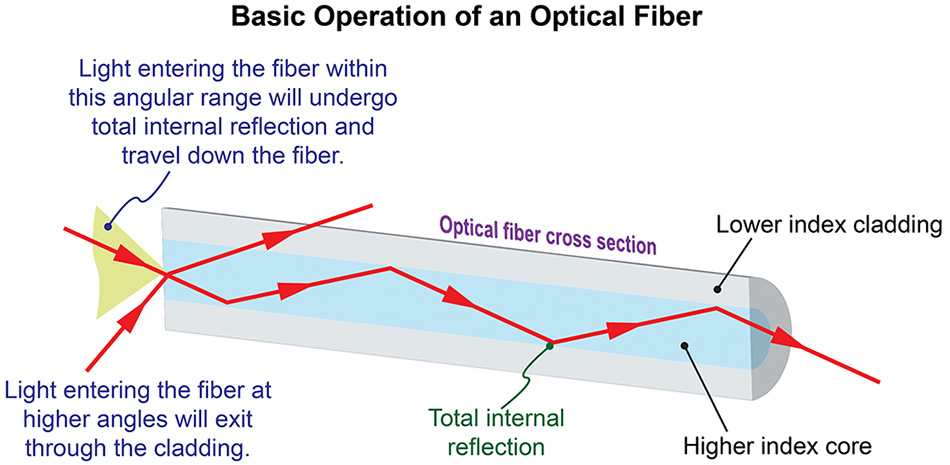
Single-mode fiber used for access (e.g., ITU-T G.652.D class) has extremely low attenuation (around 0.2 dB/km @ 1550 nm), which is why operators can upgrade speeds by swapping electronics rather than digging new trenches. That keeps long-term costs and disruption down while raising service ceilings.
How fiber compares-category by category
Speed: Download and Upload
Fiber optic: Symmetrical plans (e.g., 500/500 Mbps, 1/1 Gbps, 2/2–8/8 Gbps on multi-gig tiers). XGS-PON supports up to 10G symmetric at the protocol layer.
Cable (DOCSIS): Very fast downloads (often 300 Mbps–1.2 Gbps) but uploads are frequently 10–100 Mbps depending on profile and node load; DOCSIS 4.0 improves uploads but rollouts are gradual.
5G home internet: Wide variability by signal and congestion; some addresses see 100–300+ Mbps down but uploads and consistency vary. Providers themselves highlight variability and hybrid 4G fallbacks.
DSL: Typically tens of Mbps down and single-digit to low-tens Mbps up; aging copper limits.
What the global speed landscape looks like: Monthly aggregates show national medians for fixed broadband in the high-hundreds Mbps for top countries and global medians around ~100 Mbps; fiber-rich markets like Singapore lead the tables-evidence that fiber penetration lifts real-world speeds. (Methodologies differ, but the direction is clear.)
Latency (responsiveness)
Fiber: Lowest typical idle latency among consumer access technologies, helping smooth multi-person Zoom/Teams calls and competitive gaming.
Cable: Generally teens of ms-fine for most uses but can spike with node congestion.
5G Home Internet: Wireless introduces air-interface and scheduling delays; typical latencies are higher and more variable than wired; even carriers and third-party testing acknowledge a persistent wireless latency gap versus fiber/cable.
DSL: Higher and less consistent latency than cable/fiber in independent measurements.
Reliability and evening consistency
Fiber is less susceptible to electromagnetic interference and upstream noise that can affect cable and DSL. Broadband performance monitoring frameworks (regulators and research orgs) track consistent quality using speed, latency, jitter, packet loss and time-to-first-byte-fiber networks tend to score strongly on these composite metrics in mature markets.
Availability and transparency in 2025
In the U.S., Broadband "Nutrition Labels" are now required at point of sale, showing typical speeds, fees, and data caps-making it easier to compare fiber vs. cable vs. 5G offers where you live. Look for "fiber" or "FTTP/FTTH" on the label.
In the UK, providers must clearly state whether a product is full-fibre, part-fibre, copper, or cable, curbing ambiguous marketing.
What it means in everyday scenarios
4K streaming & family usage
Fiber shrugs off multiple 4K streams plus cloud backups thanks to symmetrical bandwidth and lower bufferbloat risk.
Cable handles several 4K streams easily, but upstream tasks (uploads, livestreaming, camera backups) may contend with limited upload capacity.
5G home internet can feel great off-peak; variable signal and contention can affect stability at night.
DSL may bottleneck even one or two 4K streams depending on loop length.
Video calls & hybrid work
Fiber: Crisp, artifact-free meetings for multiple participants; consistent upstream is key.
Cable: Mostly fine; heavy upstream use may degrade call quality.
5G: When signal is strong, it works; variability and jitter can cause glitches.
DSL: Adequate for basic calls; struggles under multi-user load.
Gaming & cloud gaming
Fiber: Best mix of low latency and low jitter-top pick.
Cable: Good; occasional spikes under node congestion.
5G: Playable for casual gaming; variability and higher jitter make it less ideal for competitive titles.
DSL: Least suitable.
Pricing and total cost of ownership
Monthly pricing varies widely by country and provider. The most important thing in 2025 is to read the new Broadband Label (U.S.) or equivalent disclosures (e.g., UK) to compare all-in price, introductory vs. regular rates, equipment fees, data caps, and typical (not "up to") speeds at peak time. These labels were mandated specifically to help you avoid hidden fees and misleading speed claims.
What about 5G home internet-should I try it?
Yes, as a viable alternative where fiber isn't available or as a price-competitive option-especially if your household doesn't rely on massive uploads or latency-sensitive work. Real-world performance varies with signal quality, local load, spectrum, and whether the service falls back to 4G/LTE. Even supporters acknowledge wireless tends to have higher and more variable latency than wired access. Check the provider's performance page for realistic ranges at your address.
How to choose-quick decision flow
If fiber is available at your address, take it. You'll get symmetrical speeds, the lowest everyday latency, and the best path to multi-gig upgrades.
If no fiber: choose cable for high download needs (4K streaming households, large game downloads).
If you move often or lack a wired drop: try 5G home internet, but test at peak hours and during bad weather; confirm return/cancel terms.
If only DSL is available: it works for light use; consider a star-topology Wi-Fi layout and traffic-shaping to keep calls stable while you explore alternatives.

Frequently asked buying questions
Q: Are multi-gig plans worth it?
If multiple people upload large files, livestream, or run Plex/home labs, yes. For browsing/4K streaming only, 1 Gbps symmetric is already "excess-smooth."
Q: Why do my speed tests vary?
Because not all test servers, peering paths, or Wi-Fi radios are equal. Try Ethernet, vary test servers, and compare peak (7–10pm) vs off-peak. Composite "consistent quality" metrics (latency, jitter, packet loss) can be more indicative of experience than a single top-line Mbps number.
Q: Is cable "good enough" for creators?
If you upload frequently, cable's limited upstream can be frustrating. If cost forces a choice, pick the highest-upload cable tier and use smart queue management (SQM) on your router.
Q: Will 5G home beat fiber soon?
5G will keep improving, but physics (shared spectrum, variable RF conditions) means wired fiber retains the edge for latency and consistent multi-gig uploads.
A discreet note from Wuhan Wolon Communication (WolonFiber)
For most households in 2025, fiber optic is the gold standard: fastest in both directions, lowest real-world latency, and the most future-proof. If you can get it, you should. If not, cable is the next-best fixed option, and 5G home internet is worth trialing where it's strong.
We don't sell internet service-we help it work better inside your home or studio. If you're upgrading to fiber or cleaning up a messy rack, you'll likely need:
Bend-insensitive patch cords (G.657A1/A2) in LC/SC to suit your ONT/ONU and wall plates
MPO/MTP trunks & cassettes for neat multi-room distribution
SFP/SFP+ transceivers for routers/switches with optical ports
AOC/DAC cables for short, tidy 10G links between devices
Sliding fiber patch panels for an organized, labeled setup
That's our lane-reliable components, strict testing, and clear labeling so the network you pay for actually reaches your devices.


